
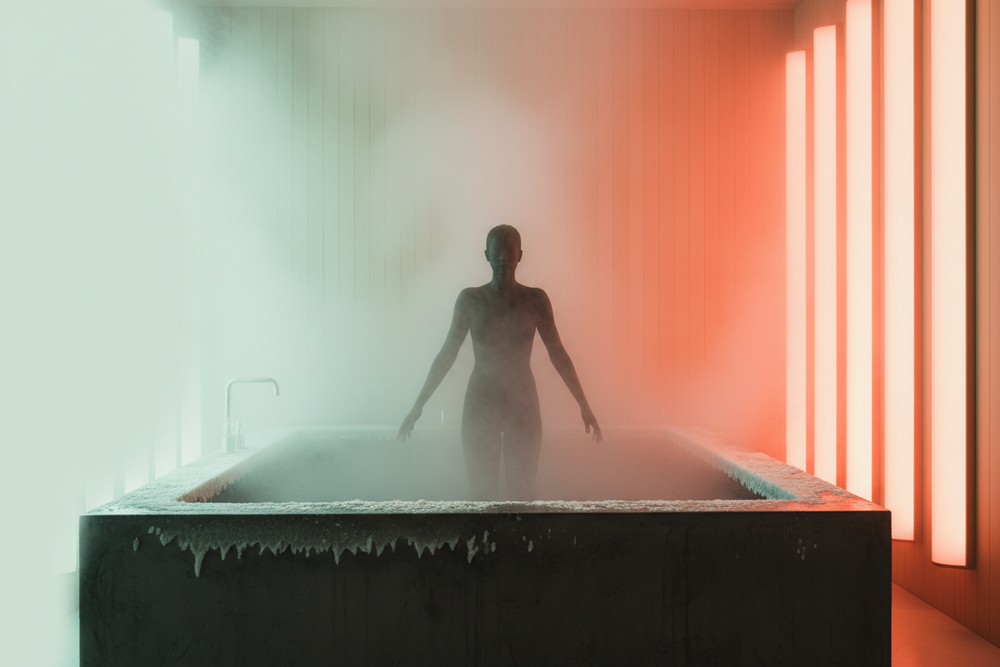
Integrating extreme hot and cold exposures into a single recovery session—a practice known as **Thermal Contrast Therapy**—is one of the most powerful ways to trigger full-body circulation, flush metabolic waste, and regulate systemic inflammation.
By cycling between the vasodilation of a sauna and the intense vasoconstriction of a cold plunge, you create a physiological pump that forces blood through your cardiovascular and lymphatic systems.
## 01 / The Vascular Pump: Vasodilation vs. Vasoconstriction
To understand why thermal contrast therapy works, we must look at how blood vessels react to extreme temperature changes:
### Phase 1: High Heat (The Sauna)
When you sit in a high-temperature sauna, your core body temperature rises. In response, your heart rate increases and your blood vessels undergo **vasodilation** (widening). Blood is rushed away from your internal organs toward the skin's surface to help sweat out heat, diluting metabolic waste buildups in fatigued muscles.
### Phase 2: Extreme Cold (The Plunge)
Submerging into a cold plunge tub calibrated to **3°C to 5°C** triggers the opposite response: instant **vasoconstriction** (narrowing). Your blood vessels constrict dramatically, pushing blood back toward your core to protect vital organs.
By repeating this hot-to-cold cycle 3 to 4 times, you create a natural muscular pump that flushes stagnant lymph fluid and lactic acid out of your tissues, replacing it with fresh, oxygenated, nutrient-rich blood.
## 02 / The Physiology of the Cold Shock Response
When your skin touches freezing water, your body enters a temporary survival state called the **Cold Shock Response**. This reaction is governed by two key biological markers:
### 1. Norepinephrine Spike
Cold exposure triggers an immediate activation of the sympathetic nervous system, releasing a massive surge of **norepinephrine** (a hormone and neurotransmitter that regulates focus, attention, and inflammation). A 3-minute plunge can boost norepinephrine levels by up to **500%**, providing a lasting mood lift, clearing brain fog, and dampening chronic joint pain.
### 2. Cold Shock Proteins (CSPs)
Freezing temperatures stimulate the release of protective molecules called **Cold Shock Proteins**, specifically **RBM3 (RNA-binding motif protein 3)**. These proteins:
* Protect brain synapses from damage.
* Prevent muscle atrophy and help preserve lean muscle tissue during recovery cycles.
* Help repair cellular structures damaged by heavy physical training.
## 03 / The Ideal Contrast Therapy Protocol
For maximum efficacy, follow this clinically backed contrast therapy template:
1. **Heat Exposure (Sauna)**: 15–20 minutes at 80°C–90°C. Relax, breathe deeply, and allow your blood vessels to dilate fully.
2. **Cold Exposure (Plunge)**: 2–3 minutes in a cold plunge pool set at 3°C–5°C. Focus on controlling your breathing—slow, deliberate exhalations will override the initial gasp reflex.
3. **Active Rest**: 5 minutes of rest at room temperature to let your heart rate stabilize.
4. **Repeat**: Repeat the cycle 3 times, always ending on the cold plunge to lock in vasoconstriction and reduce post-exercise swelling.
Our premium cold plunge tubs feature high-capacity titanium chillers that hold water at an exact, unyielding temperature. This ensures your body undergoes the maximum thermal shock needed to trigger these powerful protective proteins and accelerate your recovery.